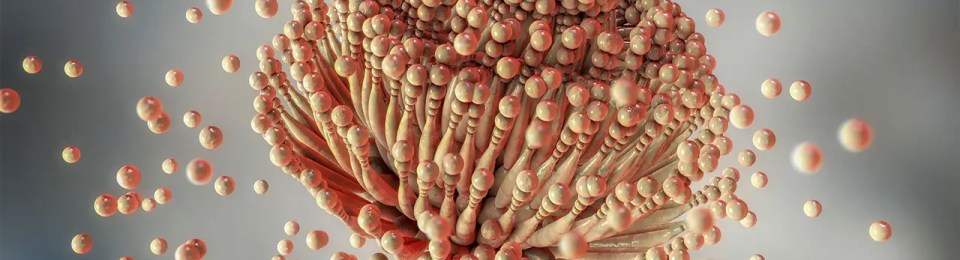
The Microbe is so very small
You cannot make him out at all,
But many sanguine people hope
To see him through a microscope.
His jointed tongue that lies beneath
A hundred curious rows of teeth;
His seven tufted tails with lots
Of lovely pink and purple spots,
On each of which a pattern stands,
Composed of forty separate bands;
His eyebrows of a tender green;
All these have never yet been seen–
But Scientists, who ought to know,
Assure us that they must be so …
Oh! let us never, never doubt
What nobody is sure about!
~The Microbe – Hilaire Belloc~
I had been unwell with a lung abscess for more than twelve months. The consensus from my multitude of specialists was that medical treatment was best, but so far getting better had continued to elude me. I was slowly coming to the realisation that I was the only person who actually knew how sick I felt. Therefore, I was the only person who could make the decision that the benefits of surgery were worth the risks.
A year before, a cavitating lung lesion had been found in an area of dead lung caused by a pulmonary embolism (a blood clot in my lung). Initially treated with a month of Amoxycillin and Clavulanic Acid, I had improved systemically, but my cough and chest pain were ongoing.
My respiratory physician said that if I got worse again after stopping my antibiotic, it wasn’t his fault. It just meant I needed a different antibiotic. These were not words that brought me a lot of comfort. Within two weeks I was back in the emergency department, unwell once more.
My medical history was complicated. On high-dose prednisone along with an immunosuppressant and intravenous immunoglobulins for an autoimmune myositis, my blood tests were all normal, and my body’s immune system refused to validate my symptoms by causing a fever. Everyone was sure I was unwell because of my myositis and that my lungs were fine…despite my ongoing productive cough and pleuritic chest pain.
The following two months felt like an eternity, as I was too unwell to do anything except lie on the lounge all day. Then drenching sweats alternating with chills joined my bone-crushing fatigue, which forced me reluctantly back to the Emergency Department.
The respiratory physician on call that day had an inkling that there was something wrong with me…but he had no idea what it could be. He decided to start with the obvious and made the decision to do a CT scan-guided lung biopsy of my lung lesion.
He later regretted this rash decision and tried to talk me out of having such a risky procedure, but I held my ground. I knew I was sick, even if I didn’t know why. Amazingly, it showed a bug hidden in my lung – probably Aspergillus – which shocked everyone, including me! My respiratory physician possibly wondered if this finding was coincidental and not actually why I felt unwell…though he knew better than to tell me that!
I was started on Itraconazole and told that it would take a long time for me to feel better. My systemic septic symptoms continued unabated, but everyone tried to reassure me that they were due to my autoimmune disease. Eventually, I gave up and decided to see an infectious disease specialist.
While waiting to see him, my general practitioner added Sulfamethoxazole and Trimethoprim (Bacterim) to my Itraconazole. Perhaps I had a second lung infection that was also making me unwell. Much to our surprise I had almost complete resolution of my systemic symptoms.
Ten days later, the infectious diseases specialist listened attentively as I told him my long and convoluted story. Due to my immunosuppressant medication, he said I needed to be treated as Subacute Invasive Aspergillosis, and he would change me to Voriconazole. As I improved so much on Sulfamethoxazole and Trimethoprim, I could very well have Nocardia as well…another pathogen common in immunosuppressed patients.
I spent the month of January feeling very well, walking three kilometres every day and catching up on some long-neglected housework. But then my medications started to try to kill me. First, my white blood cell count dropped to dangerously low levels due to my Sulfamethoxazole and Trimethoprim. This put me in danger of a life-threatening infection as my immune system would be completely incapacitated. The antibiotic was stopped, and once again I started to become unwell.
I underwent my first bronchoscopy, which failed to grow any bugs. Then my liver function tests went very high, and my Voriconazole had to be ceased. I was now very unwell with dizziness, a fast heart rate, and too exhausted to even sit in a chair. It was suggested that I should go for walks, while I desperately tried to explain to them that I was so unwell I could barely eat.
They tried to discharge me home from the hospital, but I refused. I said I was too sick. I was told I looked very stressed and that maybe I should see a psychiatrist. I told them I was too unwell to talk to a psychiatrist and that I was only stressed because nobody thought I was sick. Only later did I think of the retort that maybe I could convince the psychiatrist that I was septic!
I spent over three weeks in hospital having every investigation numerous specialists could think of, trying to find another explanation for my symptoms. All were normal, even a second bronchoscopy with an ultrasound-guided biopsy.
My case was discussed with a cardiothoracic surgeon, but a surgical option was deemed too risky…my risk of dying from surgery was thought to be between 1 and 5%. As I felt like a Victorian maiden dying slowly of consumption, that sort of risk sounded reasonable, but that probably only made me look melodramatic! I was discharged home on Posaconazole in the hope that I would just eventually get better.
Three months later, I was only very slightly better and still too unwell to read or knit. I decided I needed to talk to a cardiothoracic surgeon and weigh the pros and cons for myself. There was basically no medical literature on surgery for Subacute Invasive Aspergillosis. Surgery is most often performed for an Aspergilloma, which is quite different as it is well-contained in a lung cavity, with no spread to the surrounding lung tissue.
The surgeon was sympathetic and agreed that giving medical management twelve months to work was probably long enough. He thought my risk of dying was very low and that a cure was possible. I told him that I did not necessarily expect to be cured. All I wanted was the possibility.
I had a robot-assisted wedge resection of my single lung lesion. By the second day after my surgery, all my septic symptoms had completely resolved. By six weeks after my surgery my Aspergillus Antigen was in the normal range. My infectious diseases specialist suggested twelve months of Posaconazole to give me the best chance of a cure. He would monitor my Aspergillus Antigen level as a measure of disease control, as well as Posaconazole levels to ensure they remain in the therapeutic range.
The one big disappointment of my surgery was that despite seeing what looked like Aspergillus on my histopathology slices, the culture still came back as not being able to grow the hidden, sneaky spores that had been attacking me for so long. I had hoped that all mysteries would be revealed and that the exact organism would be finally brought to the light of day.
My Infectious Diseases specialist shrugged and said that maybe they were all dead already, and that is why they wouldn’t grow. I knew from the fact that I still felt so septic that they were in fact very much alive. My Surgeon was probably more likely to be correct about the cause. He stated simply that Aspergillus can be very hard to culture.
As I researched the mechanics of culturing Aspergillus in the lab environment, I discovered that although Aspergillus is very robust in the outdoors environment, happily living in the dirt all around me, once it gets into a patient’s lung, it becomes very delicate. It has now developed a preference for a warm and humid 37-degree lung, surrounded by an excess of oxygen and nutrition. It then refuses to grow in the less hospitable environment of a laboratory petri dish.
The most critical learning experience for me was the necessity for the patient and the doctor to act as a team, especially when there is a dearth of medical literature to inform a decision. I needed to talk to doctors who I could trust would listen to me and my lived experience of my disease. The job of my doctors was to provide me with information and advice based on their clinical experience.
It was then up to me to weigh up the risks and make the decision to have surgery. I could still relapse after stopping my anti-fungal medication, but I made the right choice for me.
“Just because you can’t see it doesn’t mean it’s not there”
In June 2025, the same month I had my surgery, the British Thoracic Society published a Clinical Statement on Aspergillus-related chronic lung disease.
They recommend that surgery should be considered for localised CCPA/SAIA lesions if adequate lung function and one or more of the following:
- Refractory to medical therapy
- Presenting with major haemoptysis
- When the diagnosis is uncertain
- If future increases in immunosuppression are planned
I had three out of the four indications for surgery. I never did have a positive culture for Aspergillus – only what appeared to be Aspergillus on microscopy. Three months after surgery, I remain well with no septic symptoms.
 Beauty for Ashes