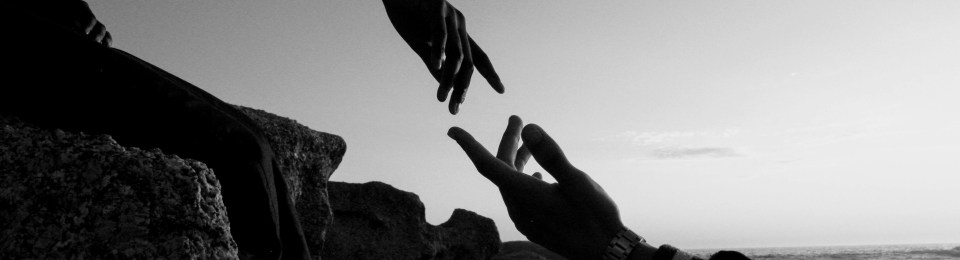
And I said to the man who stood at the gate of the year:
“Give me a light that I may tread safely into the unknown”.
And he replied:
“Go out into the darkness and put your hand into the Hand of God.
That shall be to you better than light and safer than a known way”.
~God Knows – Minnie Haskins ~
2025 had started off very well. My muscle weakness from my myositis was well controlled on Myfortic and IVIGs. I was now on a strong anti-fungal to treat Invasive Aspergillosis, as well as Bactrim to treat a possible coexistent Nocardia infection in my lung. Rapidly gaining both energy and endurance I was walking several kilometers every day and catching up on my long-neglected housework. I emailed my boss to say that I thought I’d be able to return to work in April.
But then it was my medications’ turn to try and kill me. First, I became neutropenic from my Bactrim, and shortly after that, Voriconazole sent my liver function tests skyrocketing. When both medications were stopped, I deteriorated rapidly. I was told that I looked well and had normal blood tests. How could I possibly be unwell? One of the respiratory physicians even suggested that I see a psychiatrist, as I seemed very anxious. When I said that I was too unwell to go home, I was transferred to a Brisbane hospital for my Infectious Diseases specialist to try to figure out if there was some other disease process going on.
After multiple tests, none of which showed anything new, I was eventually discharged on my third anti-fungal and to wait and see if I would eventually get better. I did not. After three months, I decided to see a cardiothoracic surgeon to discuss possible surgical treatment of my lung abscess. He thought the risks were worth it, and at the end of June, I had a robotic-assisted wedge resection of my lung abscess. Within 48 hours my septic symptoms had completely resolved.
Overall, the first six months of the year had been a struggle. I struggled to walk. I struggled to think. I even struggled to eat. I struggled to be heard. I struggled to be taken seriously. All of this resulted in a lot of medical trauma. But looking back, there were many positives. I decided I needed to start focusing on these and let my negative experiences fade into the background of my memory.
I am most thankful to my General Practitioner, who always believed in me, brainstormed with me, supported me, and validated my symptoms, even when everyone else doubted me. When she asked me what my specialists thought, I said that they probably just thought I was depressed. She said definitively, “You are sick! You have to try another antibiotic. I’ll take the blame if they complain.” We would take turns taking the blame! Sometimes I would tell her I would take the blame for our latest decision… especially if I knew it wasn’t a decision she would typically make. Despite that, she supported me every step of the way.
I am thankful for my rheumatologist for giving me cutting-edge treatment for my myositis, resulting in rapid improvement. Within 24 hours of my first IVIG dose, I regained full range of motion of my shoulders and hips, and by January I was walking 8000 steps. I would later relapse in June after decreasing my immunosuppressant in the hope it would help my anti-fungals work better. But at least I now knew the combination of medications that were likely to work, so the future had a light at the end of the tunnel.
I am thankful for my respiratory physician, who gave advice that would make a dramatic difference to my treatment…even if it was just a throwaway comment to try to placate me while feeling unwell. A month before starting Bactrim, he had said that I might have a second bug in my lungs, but it was too soon to throw random antibiotics at me. After continuing severe symptoms, and being told by the respiratory physician on call that my symptoms were all due to my myositis, my GP and I chose Bactrim to treat a possible Nocardia infection – another pathogen more common in patients on immunosuppressants. This worked incredibly well. Now I knew that my symptoms were definitely not due to anxiety or depression. I knew I was septic, which gave me the energy and self-belief to continue to fight for answers.
My respiratory physician had also told me that his next step would be to refer me to see a cardiothoracic surgeon for an opinion on the surgical management of my abscess. He gave me the name of a skilled surgeon, so that after the failure of my third antifungal, I had a plan for what to do next.
I am thankful for my Infectious Diseases specialist who believed in me from the very beginning. I had been unwell from my lung abscess for six months when I first saw him, and he was definite in his diagnosis and treatment. I was systemically unwell and immunosuppressed. I needed to be treated for Invasive Aspergillosis and he would change my anti-fungal to a stronger one. He also said I could very well have Nocardia as well, but if I got worse again, we would need to do more tests. Up until then, all the respiratory physicians had merely reiterated the mantra that I was complicated and to come back if I became more unwell. When I did go back, they assumed that I was simply stressed.
I am thankful for my cardiologist who visited me every day while in hospital in Brisbane to give me moral support. She stood up to the respiratory physician, telling him that she thought I was septic and refused to start me on treatment for dysautonomia. She was one of the few doctors who knew I was unwell, despite the fact that I looked well.
I am thankful for my cardio-thoracic surgeon who listened to my story and believed that I was unwell enough to make the possible benefits of surgery outweigh the potential risks. The Brisbane surgeon had said that the risk of dying was too high, and that it would likely spread the infection. The surgeon I spoke to told me that he thought it was unlikely that I would die, and it was possible that I may even be cured. I told him I did not necessarily expect to be cured, I just wanted the possibility.
I am thankful for God’s perfect timing for my surgery. Two weeks before, my myositis had relapsed. I had been on antifungal treatment for three months, and a partially functioning immune system was probably preferable to functioning muscles for stopping the fungus’s spread during surgery. I had no post-op septic symptoms and within a few days felt much better.
I am thankful for my husband for caring for me and supporting me. When the respiratory physician attempted to discharge me from the hospital while I was very unwell, Cam said that I was too sick to go home. The specialists were far more likely to take what he said seriously than what I said. He took a day off work to take me to Brisbane so I could attend the Myositis Discovery Program. While there, I was able to chat to a professor who was able to validate my symptoms and give me a plan for possible treatment options.
My husband also took a day off work to take me to my last rheumatology appointment. I was very stressed because four months before when I had messaged my rheumatologist about my relapse, he had not believed me. He had told me that it was very unlikely that my new onset of weakness could be due to my myositis. Even worse, he said he couldn’t just take my word for my symptoms! After getting the clearance from my Infectious Diseases specialist, I had increased my dose of Myfortic. I needed my husband there to back up my history, as I was afraid that my rheumatologist would not take my word for my degree of weakness.
Having my husband there enabled me to stay calm, explain my symptoms, and fight for more treatment. My husband could read my rheumatologist’s facial expressions and body language and reassure me that, though he might not have understood my weakness, he still believed my story. My rheumatologist eventually ordered me a second induction dose of IVIGs in an attempt to stabilise my active disease. I would go on to have seven weeks with no muscle weakness after this.
I am thankful for my children who helped with the housework, drove me to appointments, visited me in hospital and rang me frequently. They never complained, and rejoiced in each small gain. They kept me grounded and told me when I was being too optimistic in what I thought I was capable of!
I am thankful for the many ways God has shown His leading over the past year. He gave me doctors who were willing to think out of the box to treat me, as well as doctors who could support my mental health, even if they didn’t know anything about my weird diseases. He gave me doctors who gave me advice…often without knowing it! God then guided my research and helped me make sound, logical decisions.
I was astonished by God’s sense of humour when I ran into my rheumatologist at Bunnings. Two days after my final appointment, where he told me I needed to get another specialist because he didn’t understand why I wasn’t improving, I had got my movement back. After nine weeks, my increased dose of immunosuppressant had finally worked! The fact that this happened the week before my IVIGs blew me away. It was like God was sending me a message that He gave me a brain and the ability to think logically, and He expected me to use it. Then, to see my rheumatologist so I could tell him, was like a miracle. God was showing me that he cares about both my rheumatologist and me. Maybe God knew my rheumatologist needed to know that I was getting better.
I am thankful for the way God has helped me support others and taught me more empathy. I have made new friends, both in real life and online, and in turn, we have helped and supported each other. They are people who understand what it is like to live with an illness that can always recur. They know what it is like to be suddenly disabled, after being completely well. They know what it is like to fight for a diagnosis and to be heard. We can listen to each other and validate each other’s experiences.
I am thankful for old friends who rang frequently to encourage and empathise with me. They kept me up on news, shared their own struggles, and encouraged me in my faith. I always felt a part of my faith community, and I knew my presence was missed. I am also thankful for old friends who live far away who kept in touch over the year despite the distance between us. Many also had their own health struggles, which they shared with me.
Christianity is often viewed as placid – being content in the face of suffering. My experience has taught me the importance of continuing to fight and struggle. Instead of being compliant, I had to learn to be difficult. I had to learn to ignore stupid advice and seek out doctors who could give me sensible counsel. I had to learn not to trust others’ opinions if they weren’t grounded in the reality of my story. I had to find doctors willing to actually listen to my story. Ironically, God was teaching me not to be patient. He taught me that growth occurs in the struggle.
Finally, I’m thankful for the constant sense of God’s presence and leading in my life. Throughout it all, though I have often been exhausted and frustrated, I have never been depressed and have rarely been hopeless. Heading into 2026, I am currently planning to return to work, but the future is always unknown. All I can do is take the Hand of God and go where He leads. Looking back, I can see how He has led me, and I know He will never fail me. No matter what happens, God can work through me. No matter my circumstances, I can show God’s love to those around me. God is the author of my story, even if the ending is unknown.
So I went forth, and finding the Hand of God, trod gladly into the night.
And He led me towards the hills and the breaking of day in the lone East.
~God Knows – Minnie Haskins ~
 Beauty for Ashes